
Dumpster Dive 2025!
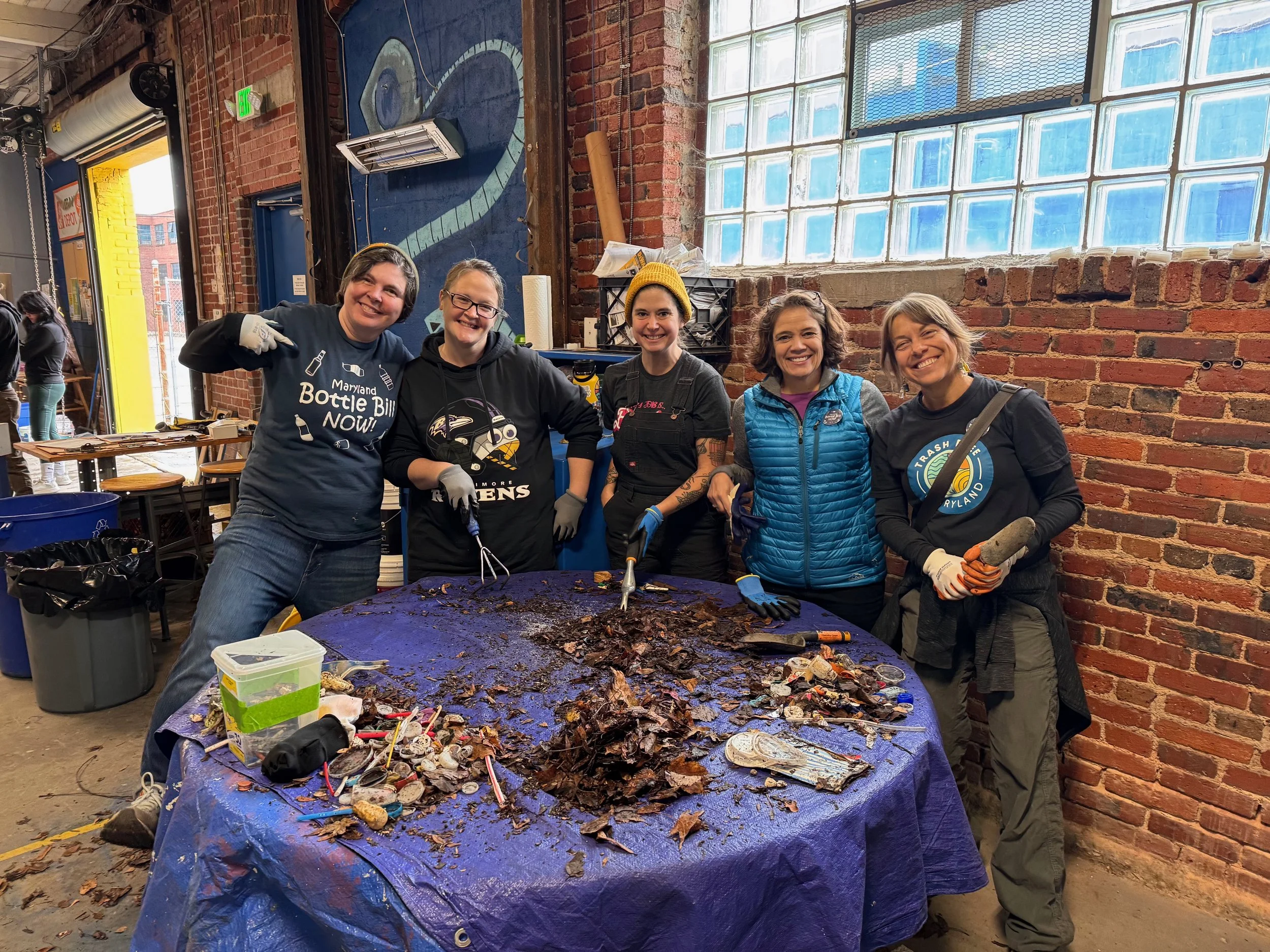
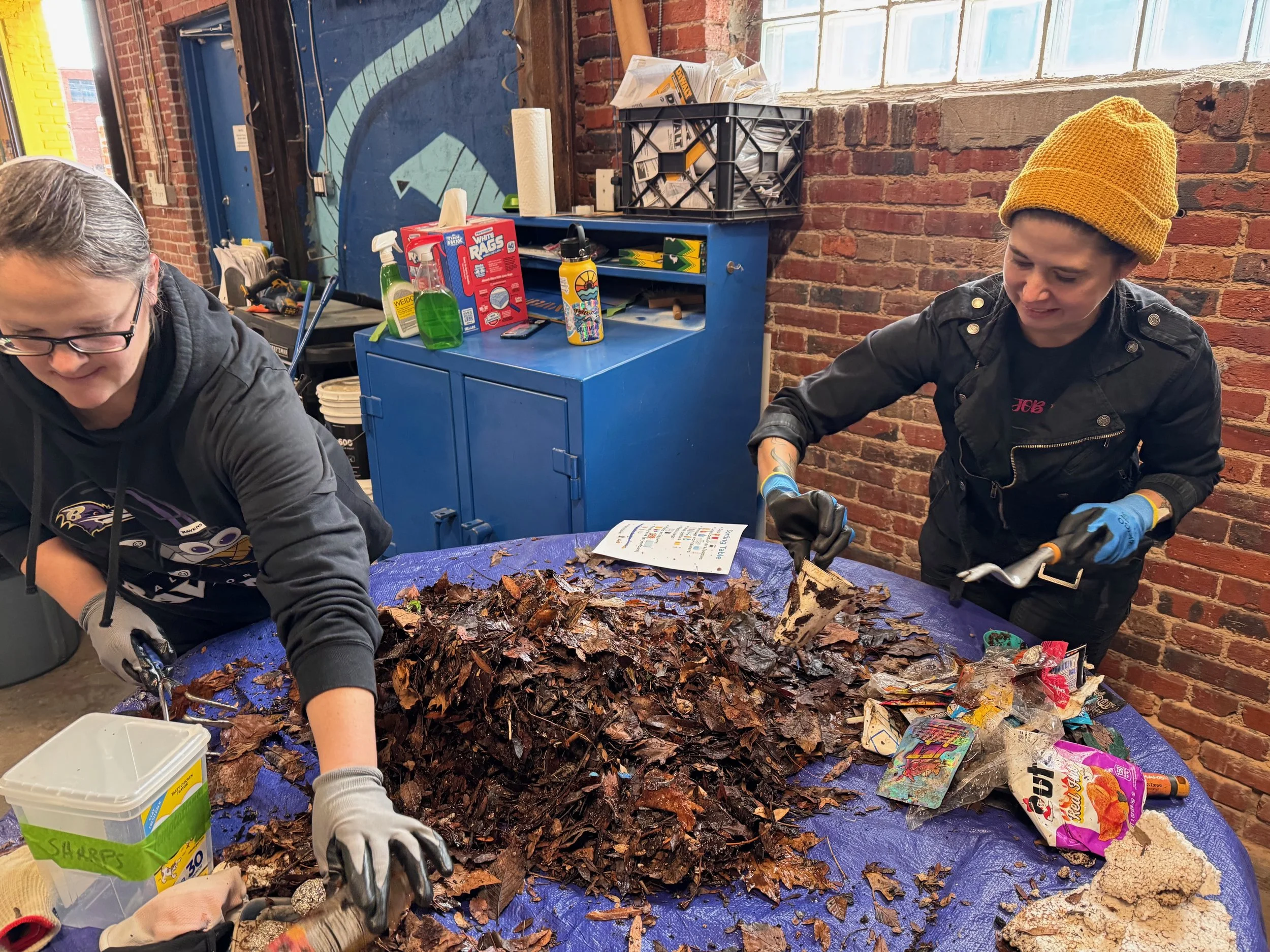
On November 15th we helped hand sort and quantify the contents of an entire dumpster full of litter pulled from the water by Professor Trash Wheel.
The Baltimore Trash Wheel family collects 500 tons of trash and debris from the mouths of streams and major outfalls around Baltimore Harbor annually, catching litter before it reaches the Chesapeake Bay and Atlantic Ocean. The Waterfront Partnership of Baltimore (Mr. Trash Wheel’s operator) convenes dozens of volunteers and organizations at the Baltimore Community ToolBank to hand count a dumpster’s contents each year.
Data and pictures from the dumpster dive help inform our advocacy. The dumpster’s contents provide a snapshot of litter. Spread out on dozens of sorting tables are the food wrappers, empty beverage containers, cigarette filters, plastic bags, chunks of styrofoam coolers, and other common litter items that washed off the streets and into the harbor’s tributary streams.
Some litter types — like styrofoam food packaging — seem to be decreasing in number, likely as a result of the statewide styrofoam food packaging ban Trash Free Maryland championed and helped pass. We can use the observed decrease or absence of this type of trash as evidence suggesting that a ban is working. If a banned item, like plastic carryout shopping bags, is still prevalent or increasing in litter, then we can look for reasons the ban on that item has not been effective. Is the ban being enforced? Has there been enough outreach and education to shoppers and retailers? Are there too many exceptions? Is this litter coming from other sources outside the jurisdiction? The dumpster contents reveal a story about our trash. This story helps us decide what items to focus on in our trash prevention advocacy.
Dumpster Data
This year the dumpster contents were sorted and counted as follows: 309 single-use cups, 87 large plastic containers and bottles, 1,162 beverage containers, 823 small bottles, 169 plastic bags, 3,520 plastic wrappers, and 193 palm-size pieces of polystyrene (styrofoam). That means that one dumpster contained 1,985 containers that were released into the environment as litter. We support a bottle bill (deposit-refund system for beverage containers) because this single policy has been associated with significantly reduced beverage container litter (based on litter surveys comparing states with and without recycling refunds or bottle bills in place).
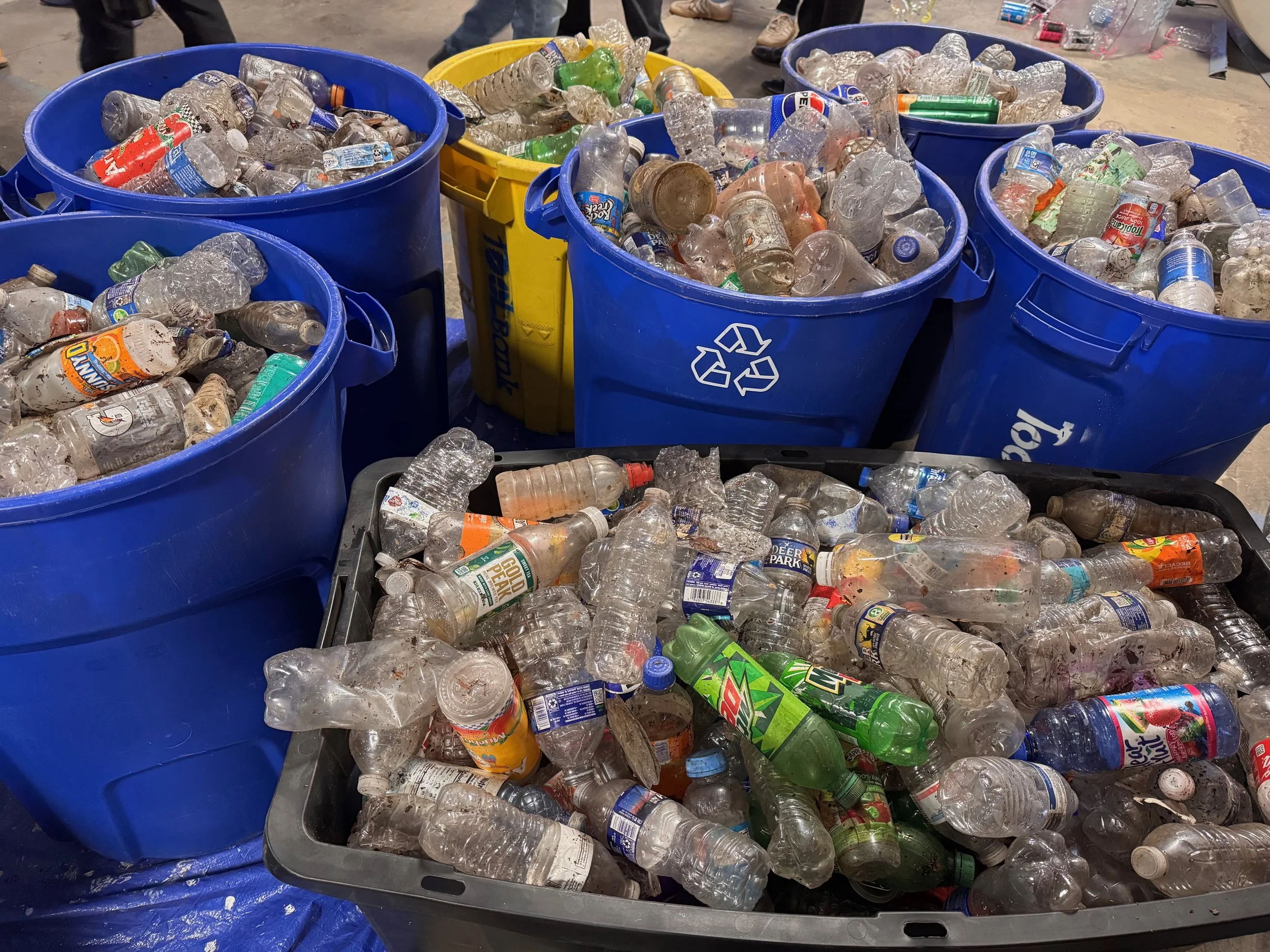
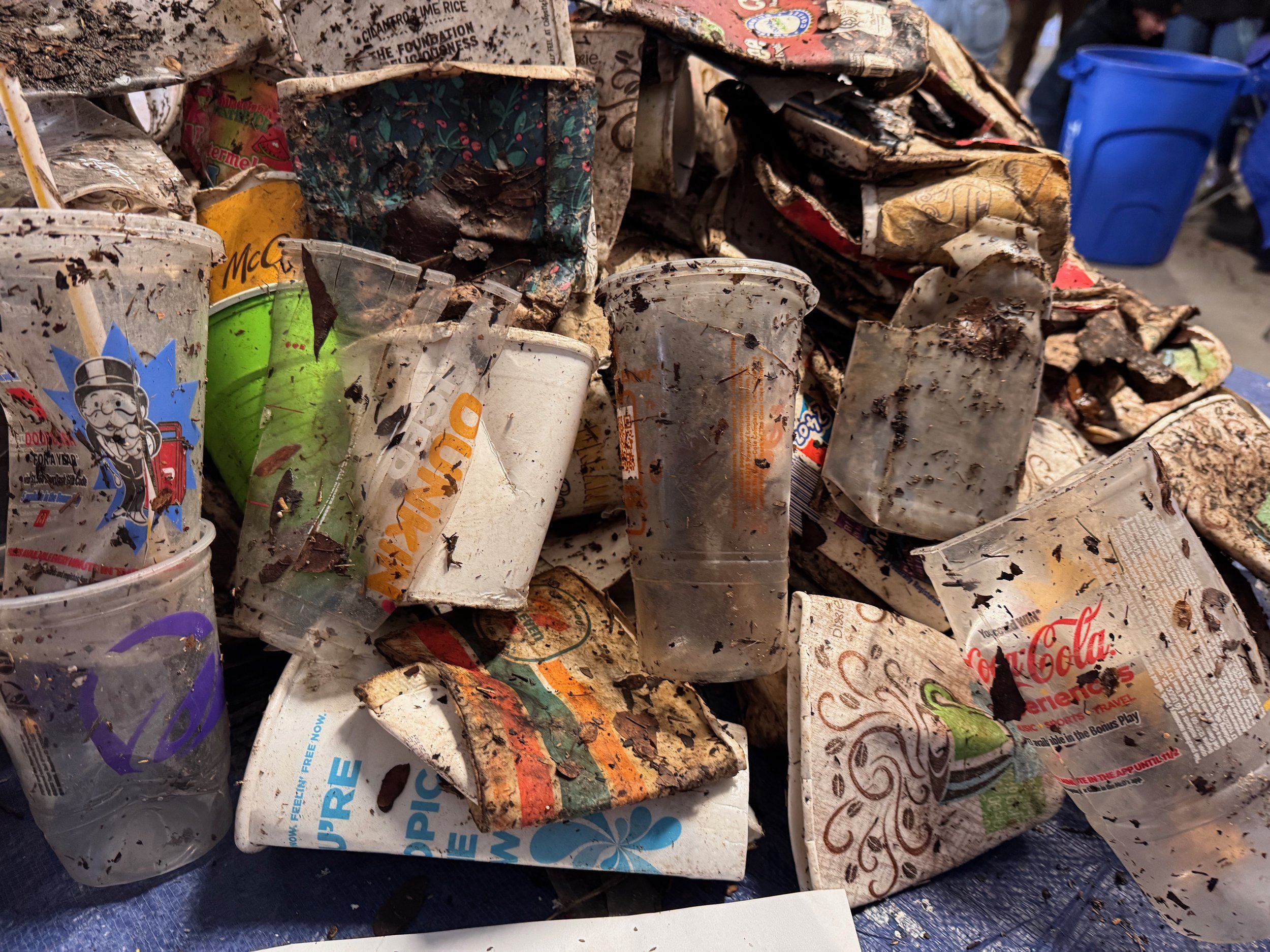
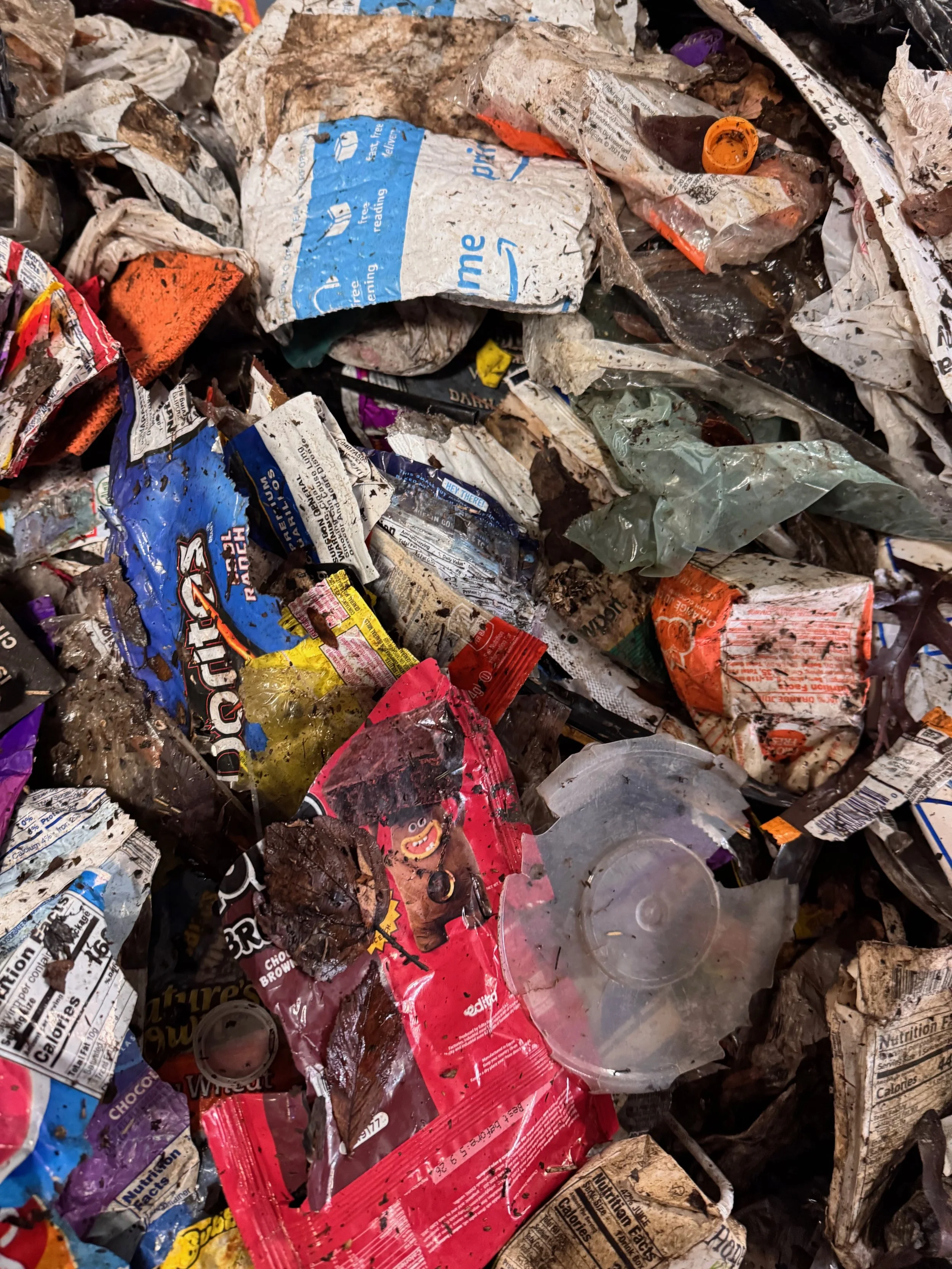
The picture in the top left corner above shows the nearly 2,000 littered beverage containers found in just one dumpster from Professor Trash Wheel. Other pictures show the variety of single-use cups and plastic wrappers sorted by volunteers.

On the left above, you can see the larger styrofoam pieces that were able to be sorted out and counted. Styrofoam pieces smaller than palm size were too numerous to count. While we did not find foam clamshell food containers (which suggests the foam ban is working), we found many chunks of polystyrene that had started as littered styrofoam coolers and foam coffee cups. Polystyrene breaks down into small pieces that are particularly challenging to remove from the environment, and our observations from this dumpster dive and other litter cleanups suggest styrofoam coolers and drink cups remain a problematic source of litter and microplastics in our water.
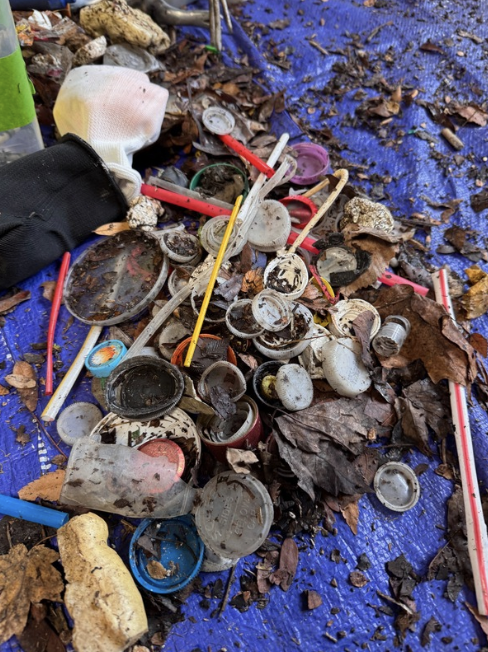
The image on the right above shows a sample of the loose bottle caps that I separated from the trash while I sorted. The EU now requires tethered (attached) bottle caps on certain beverage containers as a way to reduce litter and improve recycling. We’re watching the results of the EU legislation and think it’s time for something like that here in Maryland because bottle caps remain a common source of litter. Attached bottle caps let the user keep the bottle cap twisted off and flipped out of the way while drinking but remain tethered so that they don’t get lost as litter. We think requiring tethered bottle caps could reduce the number of littered bottle caps we find in cleanups and pull from the water.