
Skip the Stuff Policies
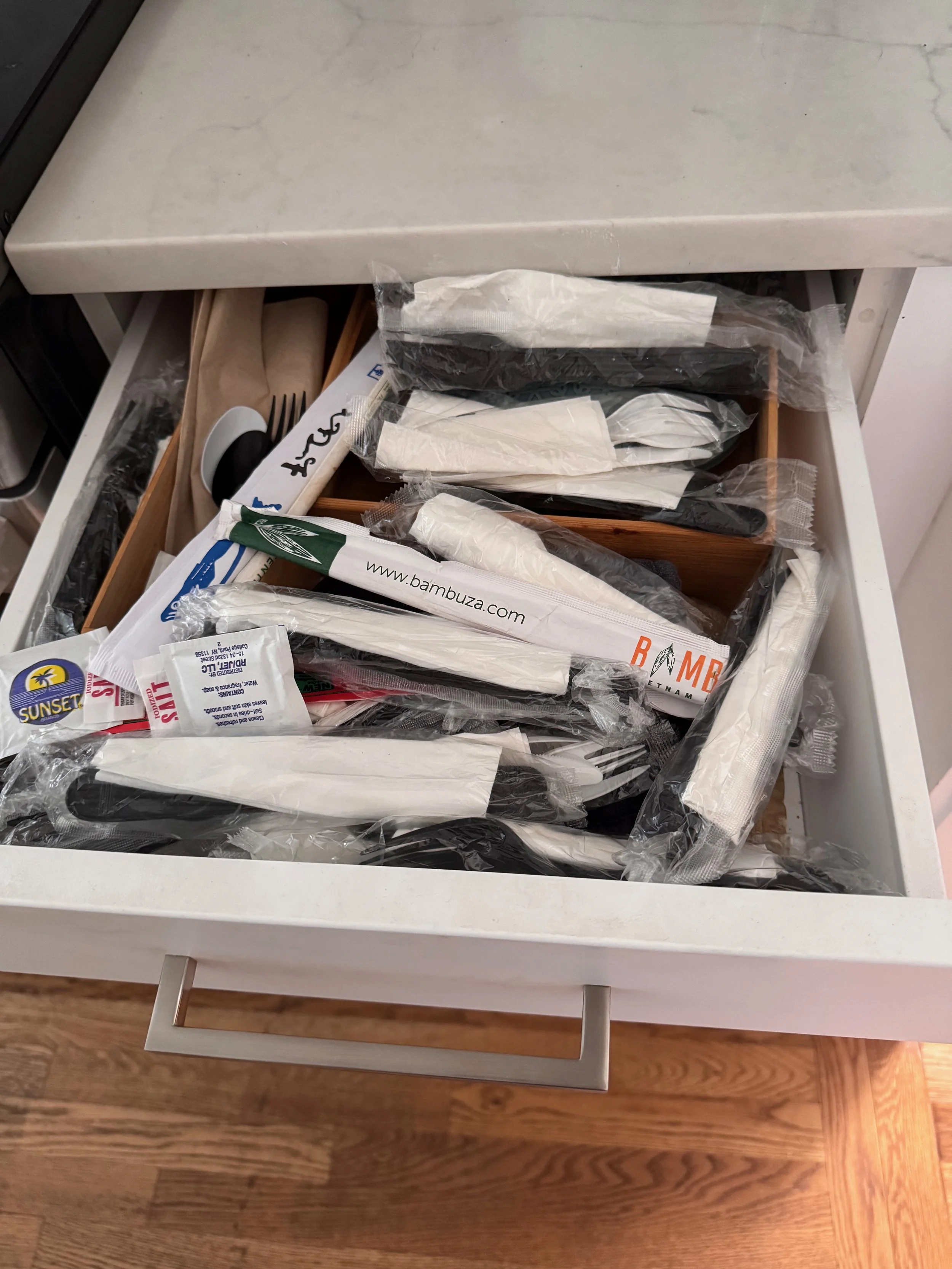
Does this overstuffed drawer of leftover single-use utensils look familiar to you?
Have you ever ordered a carryout meal and been frustrated to open the meal and find a pile of unwanted bundled plastic forks and knives and spoons or condiments?
You didn’t want the straw/spoon/ketchup packet, but once all these single-use items were in your possession, you also didn’t want to throw them out. Wasting unused utensils seems even more wasteful than using unnecessary single-use plastic forks!
Skip the Stuff, or “utensils on demand,” is a solution to this problem. Skip the stuff can reduce plastic consumption, save businesses money, prevent litter, and reduce customer inconvenience from dealing with unwanted single use plastic utensils with carryout orders.
We recently focused on “skip the stuff” policies in a learning session we hosted for our TFM Coalition. We shared best practices for new policies. We also shared lessons learned and experiences with the implementation and enforcement of skip the stuff or skip the straw policies from across our state and region
Skip the stuff (“STS”) policies require that single-use utensils are only provided with carryout orders upon customer request. STS is growing in popularity because it’s a policy that makes good business and environmental sense. Businesses save money from not providing unwanted utensils, customers who need utensils with carryout can still ask for them, customers who don’t want disposable forks don’t have to deal with them, and there is less plastic trash and litter overall. STS is also great policy for directly reducing upstream plastic production and its environmental impact.
Restaurants can always voluntarily implement their own skip the stuff approach, but skip the stuff can be more effective and convenient when it’s applied across a wider geographic region so that customer expectations and understandings are not as varied from place to place. Customers won’t have to remember if this is a restaurant or town where they need to opt out or opt in to disposable cutlery with carryout orders. Common signage and outreach can help level the playing field and customer satisfaction as well as improve implementation and efficacy.
Are you considering asking your local officials to pass a skip the stuff resolution or law? Here are some things to consider:
Avoid pitfalls like loopholes and exceptions for alternative plastics. It’s more straightforward to make all cutlery available only upon request.
Consider whether to also ban specific items like bundled cutlery (e.g., sealed packages with a fork, knife, spoon, napkin, straw, salt, and pepper).
Work with the business and restaurant community to understand potential concerns and build broad support. The policy can save restaurants money, but customer experience and expectations are also paramount priorities. Consider a transition period to allow restaurants to use up their existing stock.
Consider how to maintain ongoing education and outreach to consumers and businesses. We heard from several jurisdictions that periodic broad outreach was necessary to keep the community informed. One solution that can help with education is requiring or providing signage to be posted at the point of sale that informs carryout customers that disposable utensils will only be provided upon request.
We’re developing a fact sheet to share the lessons we’re learning from implementation of similar policies in Maryland’s local jurisdictions. Let us know if you’re working to pass a local skip the stuff ordinance in your area.
#skipthestuff